
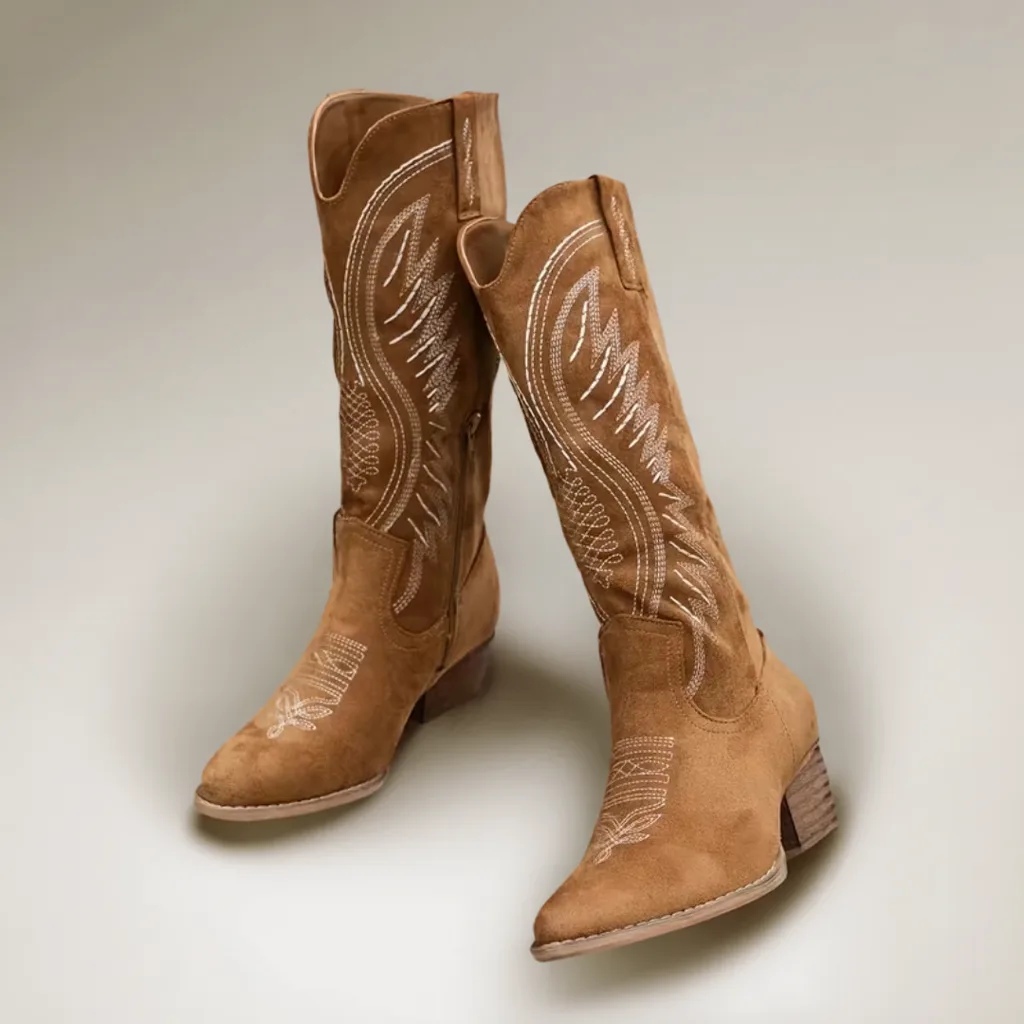
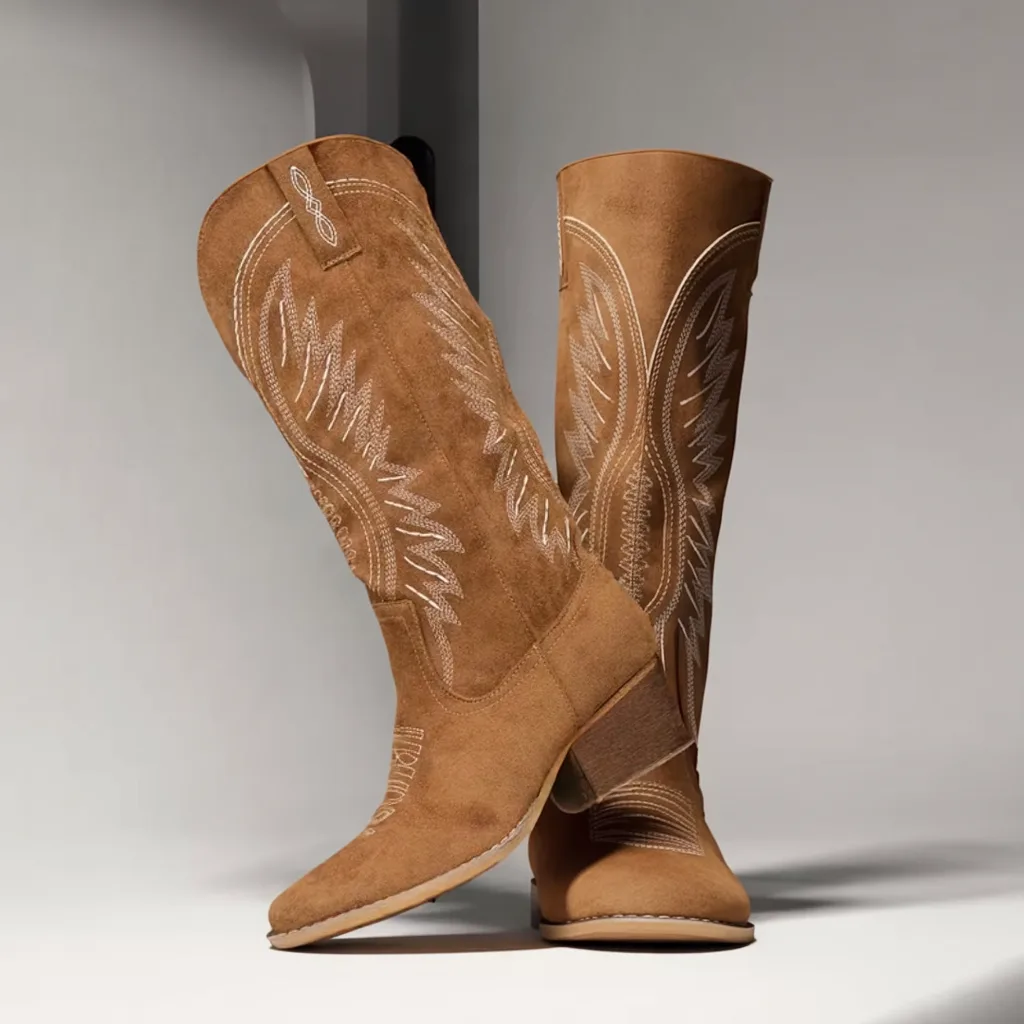
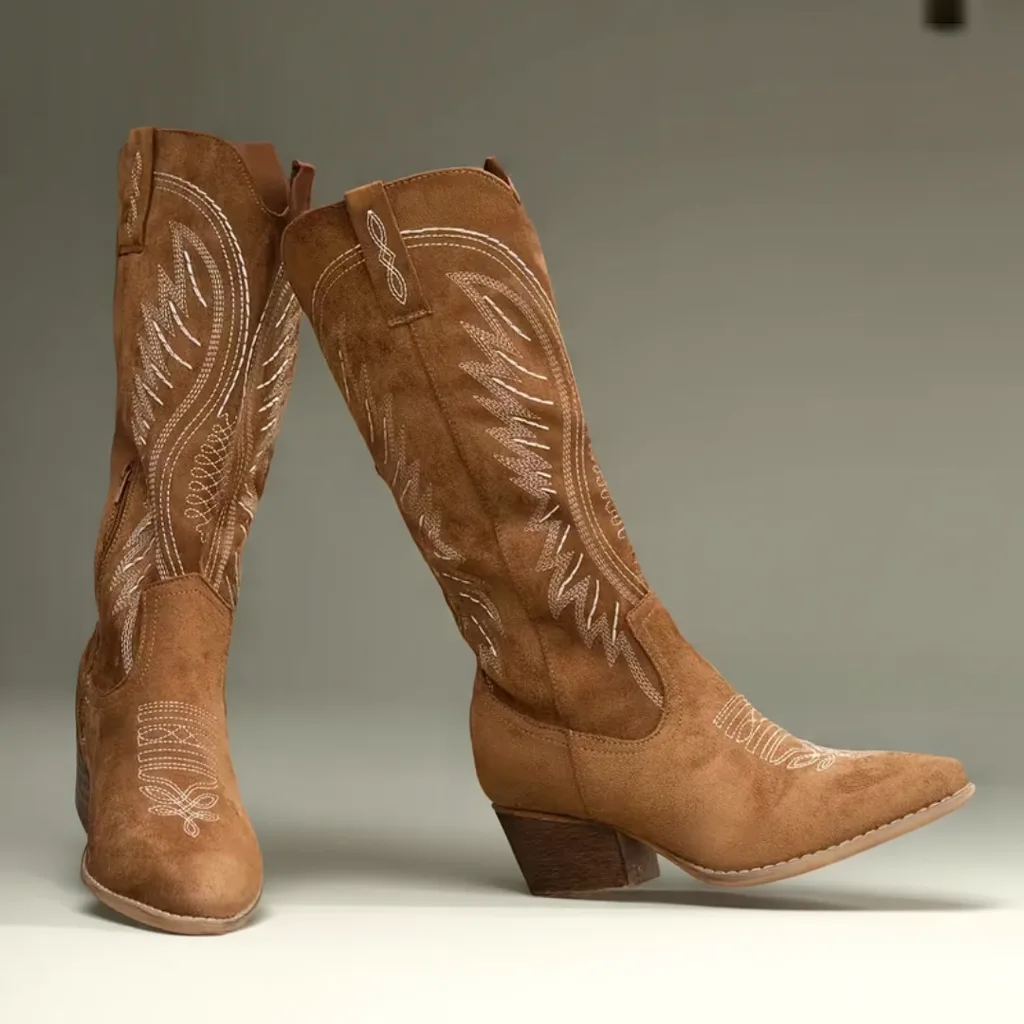
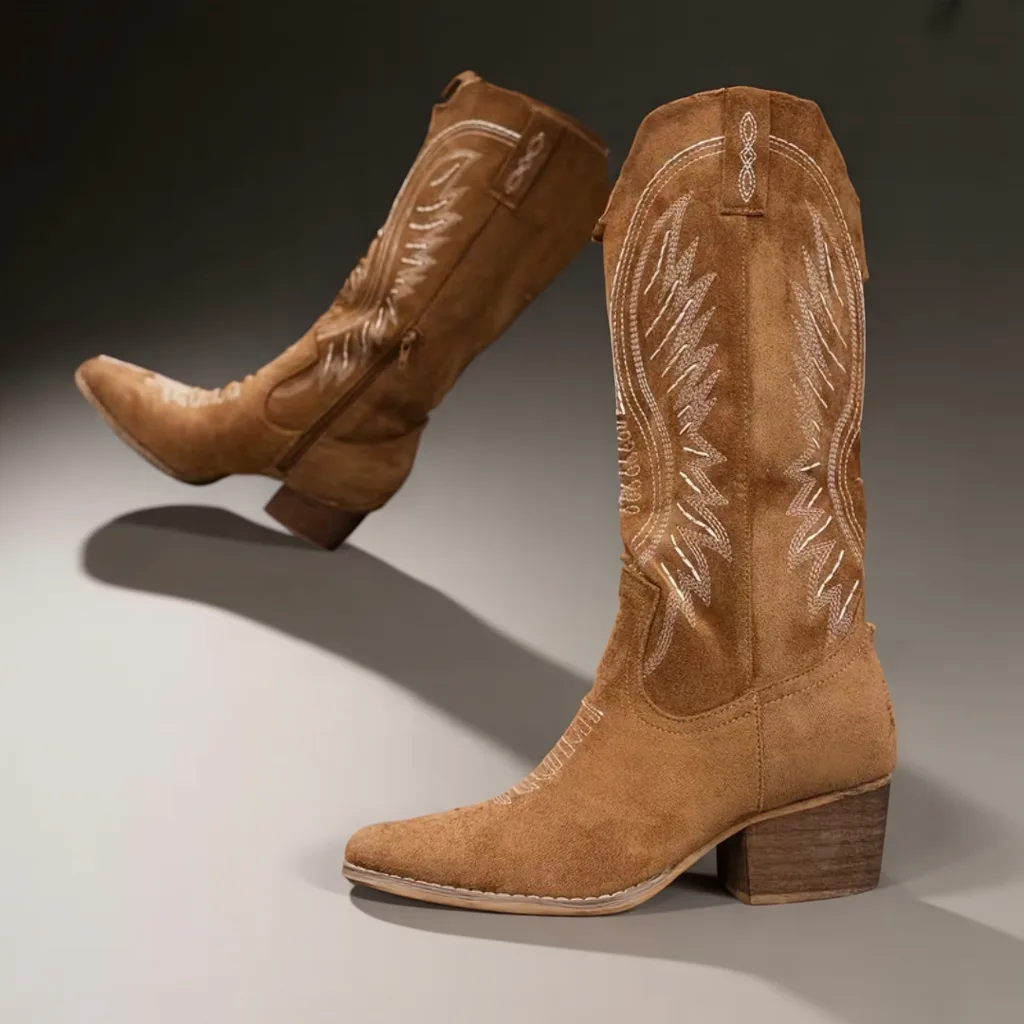
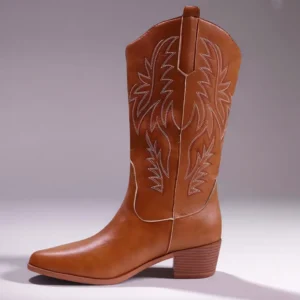
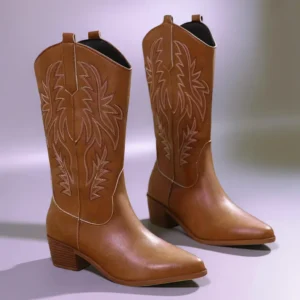
Women’s Knee High Western Cowboy Boots. Flannel Upper. Chunky Heel.
Price range: £125.00 through £130.00
The only western boot in our range with a flannel upper. Soft where every other boot is stiff. Warm where every other boot is cold. Knee-high with a chunky heel that keeps you stable from October through March when British weather does its worst.
From £125. Free UK delivery.
Free shipping on orders over £100!
- Satisfaction Guaranteed
- No Hassle Refunds
- Secure Payments
Description
Every other western boot in our range is built for three seasons. This one is built for the fourth.
October arrives. The temperature drops. You reach for your cowboy boots, and your calves feel the cold through the man-made upper within ten minutes of leaving the house. By November you have stopped wearing them. By December they are at the back of the wardrobe. By March you have forgotten which shelf they are on.
This is the boot that stays in rotation all winter.
The flannel upper is the reason. Flannel is a woven textile. It traps air between its fibres. That trapped air creates insulation the same way a wool jumper does. Your calves stay warm inside the shaft on a January morning walking from the car park to the office near Colmore Row. Your feet stay comfortable on a February afternoon walking through Cannon Hill Park with a coat on and your breath visible.
No other boot in our women’s range offers this. PU uppers do not insulate. Man-made synthetics do not insulate. Flannel does. If you want to wear western boots twelve months of the year in Britain, you need a warm pair for the cold half. This is that pair.
What flannel feels like on a boot.
If you have ever worn a flannel shirt, you already know the texture. Soft. Slightly fuzzy. Warm against skin even before you have generated any body heat. Now imagine that wrapped around a knee-high boot shaft, sitting against your calf through tights or socks on a cold day.
The softness is immediately noticeable when you slide your foot in. There is no stiffness. No rigidity fighting against your leg. The flannel moves with you. It flexes when you bend your knee. It does not creak like PU. It does not resist like stiff man-made materials.
The visual texture is different too. Flannel has a matte, slightly textured surface rather than the smooth sheen of PU or man-made leather. Under natural light, the boot reads as fabric rather than faux leather. This textile quality gives it a warmer, more approachable look than any glossy-surfaced boot.
When flannel works and when it does not.
Works brilliantly on dry cold days. October through March. Christmas markets near Victoria Square in Birmingham. Winter walks through Sutton Park. Evening meals out where you walk from the car to the restaurant in cold air.
Works well: mild, damp days where moisture is in the air but not actively falling. The flannel handles ambient dampness without immediate problems.
Does not work well: rain. Flannel absorbs water. Unlike PU, which sheds rain from its surface, flannel soaks it up. A wet flannel boot takes hours to dry properly. Wearing it wet feels cold and heavy, the opposite of its purpose.
Honest advice: do not wear these on days when rain is forecast. Check the weather. If rain is likely, wear your PU or man-made boots instead. Keep the flannel pair for dry, cold days where their warmth advantage is at its strongest.
This is not a weakness. It is a specificity. Every boot has a purpose. This boot’s purpose is warmth and softness on cold, dry days. Asking it to also be waterproof is asking a winter coat to also be a swimsuit.
Chunky heel on a flannel boot. The stability question.
Women sometimes worry that a textile upper with a high chunky heel will feel unstable. The shaft will be too soft. The structure will not support the heel height.
On this boot, the PU insole and TPU sole provide all the structural support from below. The heel is solid and wide. Your foot sits on a firm base regardless of what the upper material is doing.
The flannel shaft moves more freely than a PU shaft. This actually improves comfort on a knee-high boot because the material does not fight against your calf when you bend your knee sitting down at a desk, in a car or at a restaurant table. The flexibility of flannel at knee-high height is an advantage, not a weakness.
PU insole in a flannel boot. Why the combination makes sense.
The insole is polyurethane. Firmer and more cushioned than the fabric insoles used in some of our other boots. PU insole paired with the soft flannel upper creates a balance. Soft around your foot. Firm under your foot. Warmth from the textile. Support from the insole. Each material is doing what it does best.
The PU insole also moulds to your foot shape over time. After a week of regular wear, the insole maps your arch and the ball of your foot. The fit becomes increasingly personalised with use.
Styling flannel western boots. Different from leather-look boots.
The textile surface changes how these boots interact with outfits compared to smooth PU boots.
Best pairings: knit dresses. Wool skirts. Thick tights. Textured fabrics. Flannel boots sit naturally alongside other woven and knitted materials. The textures speak the same visual language. A chunky knit dress over knee-high flannel boots on a December Saturday in Harborne is one of the strongest winter looks in our range.
Good pairings: dark denim with the jeans tucked into the shaft. The contrast between denim and flannel creates visual interest at the boot line.
Careful pairings: very formal outfits. Flannel reads as casual and cosy. Pairing with a sharply tailored suit creates a texture mismatch. For formal settings, our dark brown knee-high boots with their smooth man-made upper handle formality better.
Care for flannel boots.
Hand wash only. The listing is clear about this, and the reason is straightforward. Machine washing will damage the flannel fibres, distort the boot shape and potentially separate the sole.
How to hand wash: use lukewarm water and a mild detergent. Dampen a soft cloth and wipe the flannel surface gently. Do not submerge the boot in water. Focus on marked or dirty areas. Rinse the cloth and wipe again to remove soap residue. Allow it to air dry naturally away from direct heat. Stuff with newspaper to maintain shape while drying.
Between washes: a soft brush removes surface dust and lint from the flannel texture. This takes ten seconds and keeps the boots looking fresh between deeper cleans.
Do not dry clean. The chemicals used in dry cleaning can damage flannel fibres and alter the colour.
Sizing for knee-high flannel.
The flannel upper is more forgiving than rigid PU. It stretches slightly and conforms to your calf shape. Women with wider calves may find flannel knee-high boots more comfortable than PU knee-high boots because the textile gives rather than resisting.
Standard UK sizing for the foot. The pointed toe narrows at the front. Between sizes, go up half a size. The chunky heel shifts weight forward slightly.
For the calf: try your regular size first. The flannel flexibility means most calf sizes are accommodated. Very slim calves may find the shaft slightly loose at the top. A boot band or simply letting the shaft naturally rest creates a slouched look that many women prefer on a textile boot, anyway.
More in the range: women’s blue floral western boots for a statement knee-high in PU. Women’s mid-calf western cowboy boots for a shorter height option. Women’s chunky-heel western boots for a bold mid-calf chunky heel. Family range of men’s cowboy boots and kids’ cowboy boots.
Additional information
| Size | 2.5, 3.5, 4, 5, 5.5, 6, 6.5, 7, 7.5, 8, 8.5, 9, 9.5, 10, 10.5, 11, 11.5, 12, 13, 14 |
|---|
FAQs
Related products
-
Sale!

Women’s Vintage Western Cowboy Boots. Mid Calf. Pointed Toe.
Original price was: £190.00.£160.00Current price is: £160.00. -
Sale!
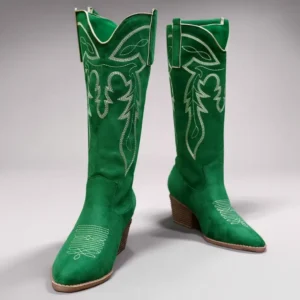
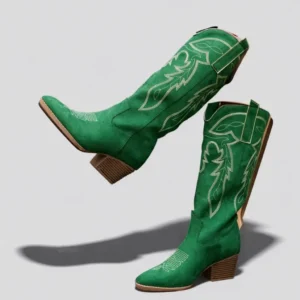
Women’s Green Western Cowboy Boots. Pointed Toe. Gold Trim Heel.
Price range: £125.00 through £130.00Select options This product has multiple variants. The options may be chosen on the product page -
Sale!
Women’s White Vintage Western Boots. Pointed Toe. Mid Heel.
Price range: £135.00 through £145.00Select options This product has multiple variants. The options may be chosen on the product page -
Sale!
Women’s Embroidered Mid Calf Western Boots. Pointed Toe. Slip On.
Original price was: £180.00.£150.00Current price is: £150.00.
Reviews
There are no reviews yet.